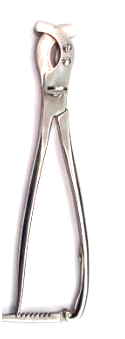
In veterinary medicine, the Sands Emasculator is a specialized surgical instrument primarily used for the humane, bloodless castration of livestock such as horses, cattle, sheep, and goats. While traditional emasculators often combine crushing and cutting in one motion, the Sands variant is distinct for its focus on crushing only, requiring a separate step to sever the cord.
Primary Uses and Mechanism
The Sands Emasculator operates on a unique “single-crush” jaw mechanism where one central blade is brought between two fixed outer blades. Its primary functions include
· Hemostasis (Bleeding Control): The tool is designed to heavily crush the spermatic cord and blood vessels, which seals the arteries and prevents life-threatening hemorrhaging.
· Crush-First Protocol: Unlike “crush-and-cut” models (like the Reimer’s Emasculator), the Sands tool focuses solely on the crush. After the pressure is applied, the veterinarian typically uses a scalpel or scissors to sever the cord 2-3 cm distal to the clamp.
· Back-Lock Security: Most high-quality Sands emasculators feature a ratchet or back-lock mechanism. This allows the tool to remain locked in the closed position for the 2–3 minutes necessary for primary hemostasis to occur without the surgeon needing to maintain manual pressure.
Benefits of Professional Grade Instruments
Surgical manufacturers like JAAKAI Surgical (and similar high-end providers) focus on several key quality markers to ensure animal safety:
· Medical-Grade Stainless Steel: High-quality instruments are forged from corrosion-resistant stainless steel, making them fully autoclavable and durable for field use.
· Reduced Trauma: By providing a clean, powerful crush, these tools minimize tissue damage and the risk of post-operative complications like scrotal swelling or infection.
· Enhanced Leverage: Professional Sands emasculators are typically around 12 inches (31cm) in length, providing the necessary leverage to safely crush the thick spermatic cords of mature large animals.
Using top-quality items is critical because dull or poorly aligned jaws can lead to incomplete crushing, which is the leading cause of internal bleeding during standing castration procedures.